
 Charles Ryan Sy
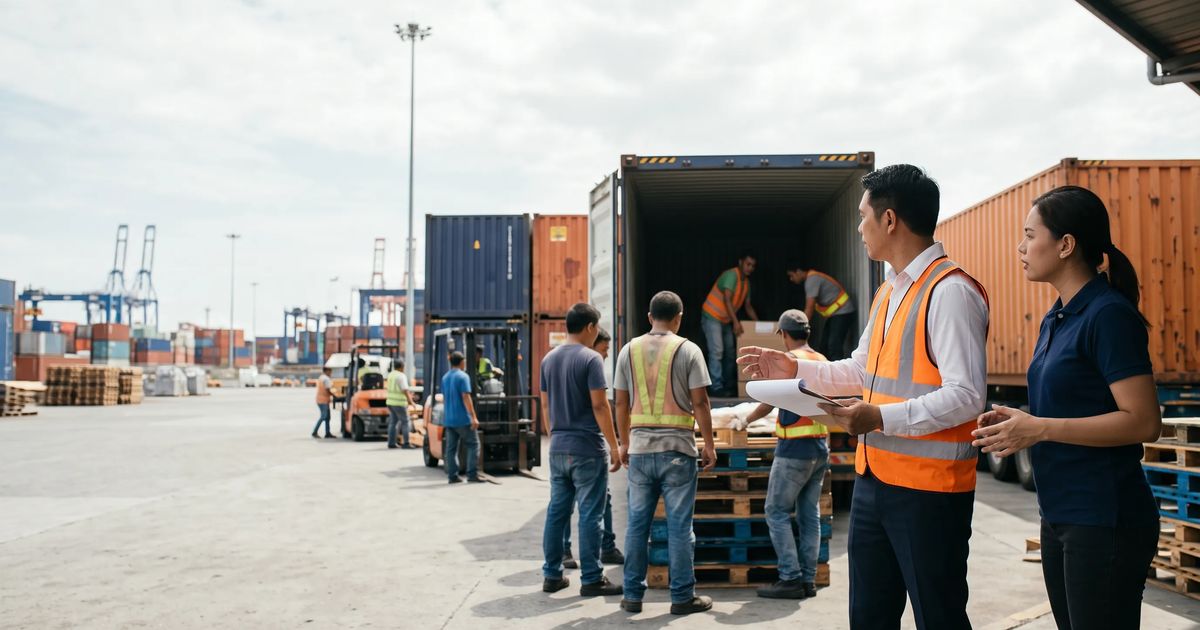
When you import goods into the Philippines, getting the shipment from the port to your business involves more than transportation. Your cargo must go through customs clearance, with the right documents, classifications, duties, taxes, and other requirements properly handled.
This is where customs brokerage comes in. In practice, most commercial entries are lodged by a licensed customs broker on the importer's behalf. Customs brokers help businesses manage the clearance process, from preparing and submitting documents to coordinating with customs and arranging the release of shipments.
But what exactly does a customs broker handle, and how much does the service cost? This guide breaks down what customs brokerage covers, the fees importers may encounter, and when hiring a customs broker can be useful for your business.
Key Takeaways: What Should You Know About Customs Brokerage in the Philippines?
- Customs brokerage in the Philippines helps importers handle customs clearance, documentation, tariff classification, assessment, and shipment release.
- Customs brokers manage the administrative side of importing, helping businesses meet customs requirements and respond to additional documentation or inspection needs.
- Customs brokerage fees are not fixed. For a standard LCL shipment in Manila, a broker's professional fee is commonly about PHP 3,000 to PHP 8,000 per entry, with extras billed on top. The cost can vary depending on the shipment, type of goods, value, port, documentation, and services required.
- Brokerage fees are only part of the total import cost. Importers may also need to pay customs duties, VAT, port and terminal charges, storage, permits, and other applicable fees.
- With complete documents, clearance usually takes about 2 to 5 working days from arrival to release. A physical inspection can add several days to more than a week.
- Customs brokerage and freight forwarding serve different roles. Brokers focus on customs clearance and compliance, while freight forwarders coordinate the transportation of goods.
- Hiring a customs broker can be useful for businesses with regular imports, complex shipments, or limited experience with Philippine customs procedures.
- Choosing a customs broker requires more than comparing prices. Consider experience, service scope, communication, and a clear breakdown of fees before making a decision.
Table of Contents
- What is Customs Brokerage in the Philippines?
- What Does a Customs Broker Do?
- How Does Customs Clearance Work in the Philippines?
- How Much Does Customs Brokerage Cost in the Philippines?
- What Other Import Costs Should Businesses Expect?
- When Should You Hire a Customs Broker?
- How to Choose a Customs Brokerage Service
- Customs Brokerage vs. Freight Forwarding
- How Can Businesses Avoid Customs Clearance Delays?
- Conclusion: Choosing the Right Customs Brokerage Service
- Frequently Asked Questions About Customs Brokerage in the Philippines
What is Customs Brokerage in the Philippines?
Customs brokerage in the Philippines is a professional service that helps importers process and clear shipments through Philippine customs. Depending on the provider, services may include document preparation, assistance with customs declarations, tariff classification, assessment coordination, payment processing, inspection assistance, and shipment release.
There is no single standard customs brokerage fee. The total cost depends on the type and value of the goods, shipment size, port of entry, complexity of the clearance process, and services included by the broker.
It is also important to remember that the broker's professional fee is only one part of the total import cost. Customs duties, VAT, port charges, storage, permits, and other applicable fees may be charged separately.
What Does a Customs Broker Do?
A customs broker helps importers manage the documentation and customs procedures required to clear goods through the Bureau of Customs. This can include preparing and submitting import documents, assisting with goods declarations, coordinating customs assessment, and following up on shipment clearance and release.
The Bureau of Customs allows a licensed customs broker to lodge a goods declaration on behalf of an importer, as long as the broker is authorized to do so. Under Section 106 of the Customs Modernization and Tariff Act (CMTA), a customs broker acting with the importer's authority may serve as the declarant for the shipment.
Depending on the shipment and the services included, a customs broker may assist with:
- Reviewing import documents for completeness and consistency
- Preparing and lodging customs declarations
- Assisting with tariff classification
- Coordinating customs assessment
- Assisting with the calculation and payment of applicable duties and taxes
- Responding to additional customs requirements
- Coordinating inspections when necessary
- Following up on customs clearance and shipment release
- Coordinating with freight forwarders, shipping lines, ports, and other parties involved in the clearance process
The exact responsibilities can vary depending on the broker's scope of service and the importer's arrangement with the broker. The importer remains responsible for meeting applicable import requirements and paying the duties, taxes, and other charges due on the shipment.
Document Preparation and Review
Accurate documentation is an important part of the import process. Depending on the shipment, documents may include a commercial invoice, packing list, bill of lading or air waybill, permits, certificates, and other supporting documents. See the Bureau of Customs' importation guidelines for current documentation requirements.
A customs broker can review these documents and help ensure the information needed for the customs declaration is complete and consistent.
Tariff Classification
Imported goods must be classified under the appropriate tariff code. This classification can affect the applicable duty rate and may also determine if additional permits or regulatory requirements apply.
Incorrect classification can result in additional questions, delays, or adjustments during customs processing. A broker with experience handling similar products can help businesses navigate this part of the process.
Customs Assessment and Release
Once the necessary information has been submitted, customs authorities assess the shipment and determine the applicable duties, taxes, and charges.
The broker can coordinate with the importer during this stage, assist with payment requirements, and follow up on the shipment until the necessary customs procedures have been completed.
How Does Customs Clearance Work in the Philippines?
The customs clearance process in the Philippines typically involves several steps between the arrival of imported goods and their release.
While the exact requirements depend on the shipment, a typical process involves:
Shipment arrival → Goods declaration and document submission → Customs review/inspection, if required → Duty and tax assessment → Payment → Customs clearance and release
The goods declaration generally needs to be lodged within 15 days after the last package is discharged from the vessel or aircraft, and duties and taxes are paid electronically through an accredited bank before the cargo is released.
How Long Does Customs Clearance Take?
With complete and consistent documents, clearance from arrival to release usually takes about 2 to 5 working days. If the shipment is selected for physical examination, add several days to more than a week.
The most common reasons it takes longer are:
- Mismatches or gaps between the commercial invoice, packing list and bill of lading (description, quantity, weight or value)
- Missing permits, such as an MSDS or another agency clearance
- Questions about classification or declared value, which can lead to a document check or physical examination
- Late payment of duties and taxes, port congestion in peak season, and holidays
Keep in mind that clearance is only the Manila end of the trip. For sea freight from China, delays before the cargo even leaves, such as a China Customs inspection, can add far more time than clearance itself.
The process can become more complicated when goods require special permits, additional documentation, physical inspection, or further review.
This is one reason businesses often use professional customs clearance services in the Philippines, particularly when they handle commercial imports or shipments with more complex requirements.
How Much Does Customs Brokerage Cost in the Philippines?
There is no single customs brokerage fee in the Philippines that applies to every shipment. The cost varies depending on the shipment, the goods being imported, and the services required.
The Bureau of Customs has a published reference schedule for brokerage fees based on dutiable value (CAO 1-2001). It starts at about PHP 1,300 per entry for low-value shipments, reaches PHP 5,300 at PHP 200,000, and adds a small percentage of the value above that. In practice, brokers quote in one of three ways. The ranges below are rough estimates for Manila:
| Charging method | Rough range | Typical use |
|---|---|---|
| Flat fee per entry | About PHP 3,000 to PHP 8,000 for a small or standard LCL shipment | Most common for small consolidated cargo |
| Per container | About PHP 8,000 to PHP 20,000 for a 20-foot or 40-foot container | FCL shipments |
| Percentage of value | About 0.125% to 1% of the CIF value | Higher-value shipments |
Extras are usually billed on top: processing and documentation, examination or stripping labor if the shipment is inspected, permit processing, and trucking.
Factors that can affect the total cost include:
- Type of imported goods
- Customs value of the shipment
- Shipment size and volume
- Port or airport of entry
- Number and type of documents required
- Tariff classification
- Required permits
- Customs inspection
- Storage or demurrage
- Broker's professional fee
- Additional services requested
When comparing quotes, look beyond the headline brokerage fee. The broker's professional fee is only one part of the total cost of importing goods. Importers may also need to pay customs duties, VAT and other applicable taxes, port or terminal charges, storage fees, permits, inspection-related costs, and transportation expenses.
Before hiring a customs broker, ask for an itemized quotation that clearly separates the broker's professional fee from government charges and other third-party costs. This gives you a clearer picture of your actual customs clearance and import expenses.
Some providers bundle clearance into an all-in rate for shared-container shipments, quoting freight, customs clearance, and duties and taxes as one figure. Others quote the brokerage fee on its own. Ask which arrangement you are being quoted, since the two are not directly comparable.
What is Included in a Customs Clearance Fee?
A customs clearance fee in the Philippines may cover professional services such as document processing, customs declaration, tariff classification, assessment coordination, and follow-up until shipment release.
However, the exact inclusions depend on the provider.
Some costs may be billed separately, including:
- Customs duties
- VAT and other applicable taxes
- Port and terminal charges
- Storage fees
- Demurrage
- Inspection-related costs
- Permits and licenses
- Documentation charges
- Delivery and transportation costs
For this reason, businesses should ask for a detailed quotation that clearly separates the broker's professional fee from government and third-party charges.
What Other Import Costs Should Businesses Expect?
Customs brokerage is only one part of the total cost of importing goods into the Philippines.
Customs Duties
The applicable customs duty depends on factors such as the classification and customs value of the imported goods, along with other applicable rules.
Different products can have different duty rates, so businesses should not assume that one rate applies to all imports.
Related: Customs Duties and Taxes on LCL Shipments to the Philippines
VAT and Other Taxes
Imported goods may also be subject to VAT and other applicable taxes. The amount depends on the shipment and the requirements that apply to the specific goods.
Port, Terminal, and Storage Charges
Importers may also need to pay charges related to handling, documentation, storage, and other port or terminal services.
If cargo remains at the port longer than permitted, storage or other additional charges may also apply.
Which Port Charges Catch Importers Off Guard?
These are ballpark figures only. Actual amounts vary by terminal, shipping line and shipment size.
| Charge | What it is | Rough scale |
|---|---|---|
| Storage | Daily charge once the short free-storage period at the port or cargo shed ends | Several hundred to a few thousand pesos per day, depending on volume |
| Demurrage and detention | Shipping line charge when a container is not cleared or returned in time | Often USD 40 to 100 per day per container (FCL) |
| Arrastre and wharfage | Port cargo handling and cargo-weight charges | A few thousand pesos per container, or per CBM for LCL |
| Cargo shed (CFS) handling for LCL | Unloading and handling of consolidated cargo | Roughly PHP 500 to PHP 1,500 per CBM |
| Reassessment and inspection | Extra duty and VAT, penalties, and examination labor after a value or classification query | From several thousand pesos upward |
| Permits and BOC fees | Agency permits, entry processing and documentary fees | Varies by product |
Permits and Special Requirements
Certain products may require permits, clearances, certifications, or additional documentation before they can be released.
These requirements can add both costs and processing time, which is why it is useful to identify them before the shipment arrives.
When Should You Hire a Customs Broker?
Not every importer needs the same level of support. Businesses with extensive import experience and dedicated logistics staff may handle some customs processes internally. For others, professional assistance can make the process easier to manage.
A customs broker may be useful if:
- You are importing commercial goods for the first time
- Your business regularly receives international shipments
- You are unfamiliar with tariff classification
- Your products require permits or special documentation
- You handle multiple types of imported goods
- Your internal team has limited customs experience
- Customs-related paperwork takes too much time
- Shipment delays could disrupt your operations
For occasional or straightforward shipments, the level of assistance needed may be different. The key is to consider the complexity of your imports and the resources available within your business.
How to Choose a Customs Brokerage Service
The cheapest quoted brokerage fee is not necessarily the only factor worth considering. A provider should also have experience with your type of cargo and clearly explain what its service includes.
Look at Relevant Experience
Ask whether the broker regularly handles shipments similar to yours. Experience with your products or industry can be helpful when dealing with tariff classification, documentation, and additional requirements.
Request a Detailed Cost Breakdown
Ask the provider to separate its professional fee from customs duties, taxes, port charges, and other third-party costs.
This makes it easier to estimate your total customs clearance cost in the Philippines and compare quotations more accurately.
Confirm the Scope of Service
Find out exactly what the quoted fee covers. Does the broker handle document preparation, customs declaration, assessment, inspection coordination, payment processing, and shipment release?
Having a clear scope can prevent unexpected charges later.
Consider Communication and Follow-Up
Customs clearance may involve several parties, including the importer, customs authorities, freight forwarder, shipping line, and port.
A provider that gives clear updates and promptly addresses documentation or clearance concerns can make the process easier to manage. Ask how and when you will be told if the shipment is selected for inspection or held.
Customs Brokerage vs. Freight Forwarding
Customs brokerage and freight forwarding are both part of the import process, but they handle different responsibilities. A freight forwarder primarily manages the movement of goods, while a customs broker focuses on getting those goods cleared through customs.
| Aspect | Customs Brokerage | Freight Forwarding |
|---|---|---|
| Primary Role | Handles customs clearance and compliance requirements | Arranges and coordinates the transportation of goods |
| Main Focus | Customs procedures and import documentation | Cargo movement from origin to destination |
| Common Services | Customs declarations, tariff classification, customs assessment, and clearance coordination | Freight booking, cargo pickup, transportation coordination, and shipping documentation |
| Customs Coordination | Coordinates directly with customs authorities on clearance requirements | May coordinate with the customs broker as part of the overall logistics process |
| Documents Handled | Customs declarations and supporting import documents | Bills of lading, shipping documents, and transportation-related paperwork |
| Shipment Release | Helps coordinate customs clearance and release | Coordinates transportation after the cargo is cleared and ready for delivery |
| Best For | Businesses that need assistance with customs compliance and import clearance | Businesses that need help arranging and managing cargo transportation |
Some logistics providers offer both customs brokerage and freight forwarding, allowing businesses to coordinate transportation and customs clearance through one provider. This can simplify communication and make it easier to manage shipments, particularly for businesses importing from China to the Philippines or other countries.
For businesses looking for end-to-end support, services that combine freight forwarding and customs clearance in the Philippines can cover more of the import process under one provider.
Related: How to Choose a Freight Forwarder from China to the Philippines
How Can Businesses Avoid Customs Clearance Delays?
While not every delay can be prevented, proper preparation can reduce avoidable issues.
Before your shipment arrives, check that your documents are complete and that the information on your invoice, packing list, and shipping documents is consistent.
It also helps to:
- Provide accurate descriptions of the goods
- Confirm the appropriate tariff classification
- Prepare required permits in advance
- Check quantities and declared values carefully
- Work with experienced customs and logistics professionals
- Ask about potential additional charges before shipment
Good preparation gives your broker and other parties the information they need to process the shipment more efficiently.
Conclusion: Choosing the Right Customs Brokerage Service
Customs brokerage in the Philippines can help businesses manage the paperwork, declarations, assessments, and other requirements involved in clearing imported goods.
The cost depends on the shipment and the services required. Beyond the broker's professional fee, businesses should also account for customs duties, taxes, port charges, storage, permits, and other applicable expenses.
If your business imports regularly or handles shipments with complex requirements, working with an experienced customs broker can simplify the clearance process and reduce the administrative work involved. When comparing providers, look beyond the initial fee and consider their experience, service coverage, communication, and the overall cost of getting your shipment cleared and released.
Frequently Asked Questions About Customs Brokerage in the Philippines
What is customs brokerage in the Philippines?
Customs brokerage is a professional service that helps importers handle customs-related requirements, including documentation, declarations, tariff classification, assessment, payment coordination, and shipment release.
How much does a customs broker charge in the Philippines?
There is no standard fee for every shipment. A broker's professional fee can vary based on the shipment, type of goods, complexity of the clearance process, and services provided. For a standard LCL shipment in Manila, a flat fee of about PHP 3,000 to PHP 8,000 per entry is common, while full containers are often quoted at about PHP 8,000 to PHP 20,000. Extras such as inspection labor, permits and trucking are usually billed on top.
What is included in a customs clearance fee in the Philippines?
It depends on the provider. A customs clearance fee may cover document processing, customs declarations, assessment coordination, and follow-up. Duties, taxes, port charges, storage, permits, and other expenses may be billed separately.
What documents are needed for customs clearance in the Philippines?
Common import documents include a commercial invoice, packing list, bill of lading or airway bill, and other supporting documents required for the shipment. Depending on the goods, a certificate of origin, import permit, clearance, or other regulatory documents may also be required.
Is customs clearance the same as customs brokerage?
No. Customs clearance refers to the process of getting goods cleared by customs, while customs brokerage is a professional service that assists the importer with that process.
Who pays customs duties and taxes in the Philippines?
The importer is generally responsible for applicable customs duties, taxes, and other import-related charges. A customs broker can assist with the assessment and payment process.
How long does customs clearance take in the Philippines?
With complete and consistent documents, clearance from arrival to release usually takes about 2 to 5 working days. A physical inspection can add several days to more than a week. The timeline varies depending on the shipment, documentation, customs procedures, inspections, permits, and other requirements. Complete and accurate documents can help reduce avoidable delays.
Planning an import shipment? See how StratQuad's importation service works for LCL shipping from China, with customs clearance arranged as part of the service.
Looking for more guides? Browse our import guides for Philippine businesses.